
New Haven County VINELink Coverage
Connecticut VINE is the state entry point for public custody searches and notifications from participating sources. In New Haven, correctional custody differs from the county-jail model used elsewhere. The Connecticut Department of Correction operates both pretrial jails and sentenced prisons. New Haven Correctional Center, Cheshire Correctional Institution, Manson Youth Institution, and York Correctional Institution are all part of that statewide system. VINE can help check a named person or follow a supported change, but coverage and fields depend on the agency feed.
The service should not be treated as a permanent list of everyone released in New Haven County. It may show current custody status or send a change notice, while an official release or discharge record comes from DOC, the court, or the facility that created it. The short-term Union Avenue police lockup is a separate local stage. A very recent city arrest may require NHPD booking information first, followed by DOC and court checks if the person was transferred.
Search New Haven County VINELink
Search for one person at a time. Gather the legal name and an ID number if known. Age, date indicators, agency, and custody location can help separate people with similar names. Never choose a record based on name alone. If the page shows no match, try a reasonable name variation and then move to the CT DOC inmate information search. The DOC source is fed nightly from the state’s Offender Based Information System, while VINE uses its own participating notification data.
- Open the Connecticut VINE state page and choose the person-search option.
- Enter the name or available identification number using only the fields the live form requests.
- Compare each result with known details such as agency, age or date information, location, and ID.
- Open the matching record and read the current custody status before selecting an alert option.
- If no reliable match appears, check DOC, the court docket, or the agency that last held the person.
New Haven Correctional Center primarily houses pretrial people, so a court event can be as important as a custody result. The Judicial Branch criminal lookup provides pending-case, conviction, daily-docket, and warrant routes. If a name disappears after court, compare the docket event with DOC and VINE instead of assuming that release occurred.
New Haven County VINE Release Fields
Connecticut’s live VINE result fields were not fixed in the static research, so field names should be read exactly as the service displays them. A VINE result may present a supported custody status, agency, location, or offender identifier. It may also show or notify a release, transfer, or out-of-custody change where the participating source supplies that event. The absence of a date or label should not be filled in from guesswork.
| Possible item | How to use it |
|---|---|
| Name | Match the legal name, then confirm with other details. |
| Person or offender ID | Use the identifier to distinguish records and compare with agency data. |
| Custody status | Read the exact live label, which may indicate custody or a supported change. |
| Agency or location | Identify the office or facility whose record should confirm the event. |
| Release or transfer notice | Treat the alert as a prompt to check the official agency record. |
DOC provides a broader Connecticut field inventory for correctional records. It can include inmate number, status, location, controlling offense, sentence dates, estimated release date, special parole date, and detainer information. Not every field appears for every person. VINE’s role remains narrower: find a supported person record and receive custody-change information.
Note: An “out of custody” label does not identify every later court, supervision, transfer, or detainer status.
Register New Haven County Release Alerts
Once the correct person is open, use the notification choices offered in the live Connecticut VINE flow. Supported methods may include phone, email, text, or another listed channel. Registration details should stay private. A phone workflow may ask for a PIN or another confirmation step so the recipient can acknowledge the notice. If the live flow does not show a PIN, follow its displayed confirmation instructions and do not invent one.
- Confirm the identity and current agency before opening the notification panel.
- Select the release, transfer, or custody-change notice that the record offers.
- Choose a supported phone, email, text, or other delivery method.
- Complete the required verification, confirmation, or PIN step shown by VINE.
- Save the confirmation and keep the contact method active until the case no longer needs monitoring.
A notification can arrive after the agency reports a change. It may not arrive at the moment someone walks out of a building. Keep the registration private and avoid using another person’s contact details. If timing is urgent, check the official source again rather than relying only on one alert.
New Haven County VINE and SAVIN
Connecticut offers related but distinct notification layers. DOC provides confidential custody-status notification before and after sentencing through its Victim Services Unit. CT SAVIN provides notification about criminal court cases. The programs can concern the same person, yet they do not report the same event. A custody release or transfer belongs to the correctional notification path. A court hearing, schedule change, or case event belongs to the court-notification path.
The Connecticut victim notification brochure gives the DOC Victim Services Unit phone as 1-888-869-7057. DOC’s official FAQ also directs release-notification questions to Victim Services. Use Connecticut VINE for supported custody searching and alerts, CT SAVIN for supported court-case notice, and the Judicial Branch docket for the public case record. Registering with one system should not be assumed to enroll a person in the other.
The distinction becomes especially useful around a New Haven court date. SAVIN may report a scheduled or changed case event without showing whether DOC still holds the person. VINE may report a custody change without explaining the ruling that caused it. The public court docket can supply the case context, while DOC records can confirm the correctional event. When timing or labels differ, record which program sent the notice, when it arrived, and which agency was named. That small audit trail helps direct a follow-up call to the right office.
- VINE
- A search and notification service for custody information supplied by participating agencies.
- CT SAVIN
- A confidential Connecticut notification channel for supported criminal court-case events.
- Custody change
- A reported release, transfer, or other move in the participating agency’s custody status.
- Release record
- The agency or court document that officially records the release or discharge event.
New Haven County VINELink Limits
VINELink is not the Federal Bureau of Prisons locator and does not replace ICE’s detainee system. A federal sentenced person should be checked through the BOP Inmate Locator. BOP explains that a past release date with no facility can mean the person is no longer in BOP custody, although another custody or supervision status may still exist. For immigration detention, use the ICE Online Detainee Locator System. Federal court case history follows the U.S. District Court or PACER route.
The manifest includes a successful image from the USA.gov ICE locator guidance, which documents this separate federal lookup path.
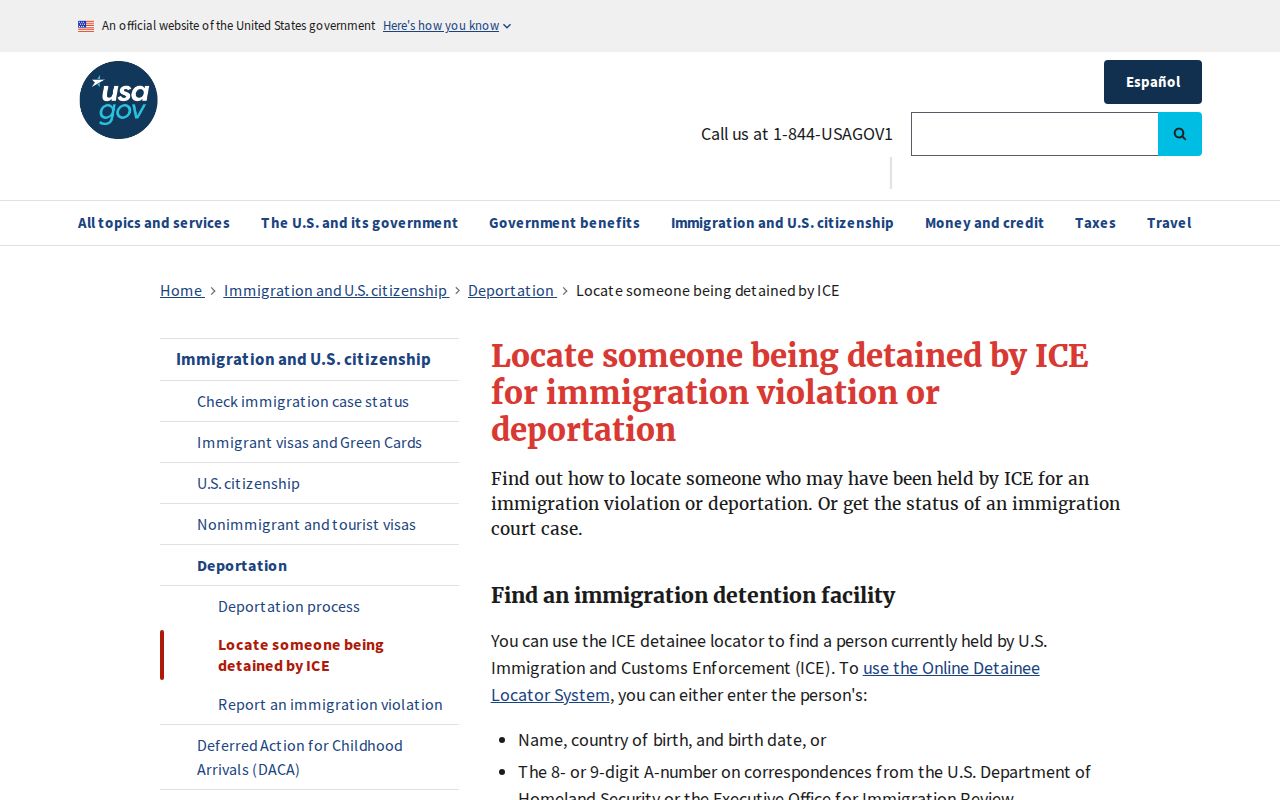
The federal guidance reinforces why a Connecticut VINE result cannot settle an ICE custody question.
Data timing is another limit. CT DOC says its public inmate search receives a nightly feed from OBIS. VINE depends on agency reports and its own delivery process. A court docket may also change daily. These systems can update on different schedules, so compare the time and source behind each result. A transfer may look like release from one agency while custody continues elsewhere.
Confirm New Haven County Releases
Use the agency that held the person to confirm the event. For New Haven Correctional Center or another state facility, check the DOC search, facility contact, DOC records office, and court docket. For a person processed only by New Haven Police, NHPD booking or records may be the first source. For parole or special parole, DOC Parole and Community Services and BOPP records address the later supervision status. VINE adds notice but does not replace these records.
A good confirmation matches the full name, ID or docket number, facility, event date, and status across more than one official source. If VINE reports a change but the agency record has not updated, note the time and check again. If the agency record shows a detainer, transfer, or special-parole date, “released” may mean release from one form of custody rather than freedom from every legal hold.
For an official document, request the record from the office that created it. DOC’s FOI process can address state correction movement or release records, subject to legal limits. NHPD records handles releasable city police material, and the court clerk handles case records not resolved by the online docket. Give a full name, known identifier, facility, and narrow date range. A focused request is easier to route and less likely to confuse a custody alert with a formal discharge record.
The New Haven County release-record overview explains the wider path when the custody system is uncertain. For a specific VINE check, keep the task narrow: identify the right person, register the appropriate alert, and verify the resulting event with its originating office.